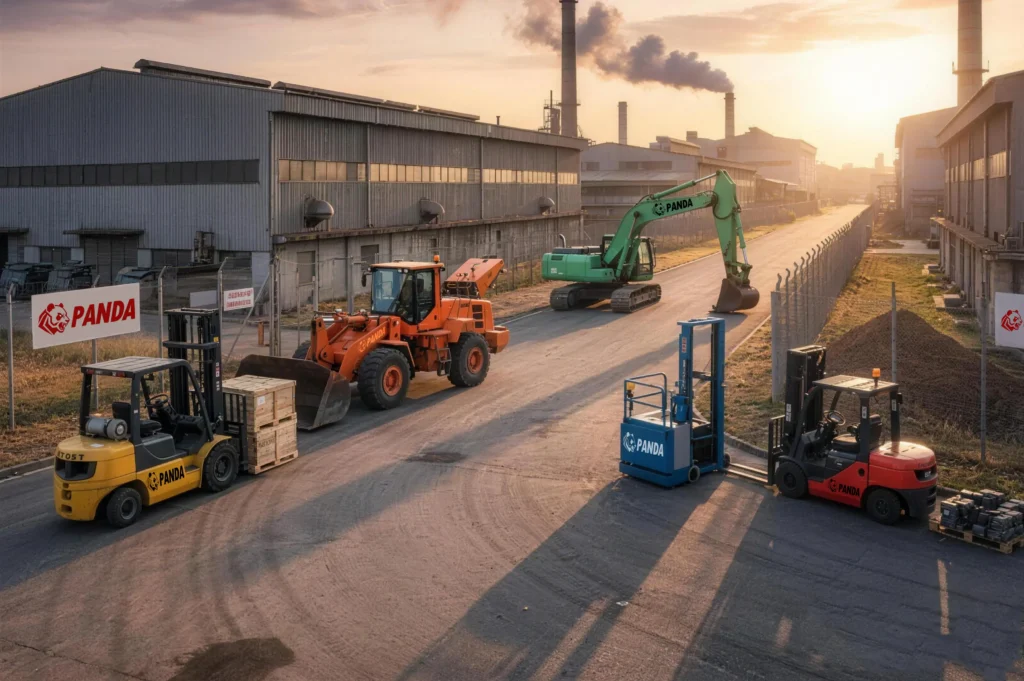

The modern supply chain is a symphony of automation, robotics, and complex software. Yet, at the heart of almost every successful warehouse, distribution center, and manufacturing plant lies a machine that hasn’t fundamentally changed in decades: the humble forklift.
Often overlooked for flashier robotics, the forklift remains the essential, versatile workhorse that keeps the global economy moving. Here’s why this machine is still the undisputed king of material handling and what’s next for its evolution.
1. The Power of Versatility and Flexibility
No robot, yet, can match the sheer adaptability of a human-operated forklift.
- Load Variety: From pallets of paper to massive steel beams, a forklift can handle almost any shape, size, or weight of load with a simple change of attachment (think clamps, rotators, or slip-sheet push-pull devices).
- Variable Environments: Whether it’s a sub-zero cold storage unit, a dusty outdoor lumberyard, or a high-ceiling, narrow-aisle warehouse, there’s a specialized forklift designed to handle the specific conditions.
- Instant Re-tasking: A human operator can switch from unloading a truck to stacking a pallet to retrieving a specific item immediately, without complex programming or sensor recalibration.
2. Safety and the Human Element
Modern forklifts are packed with technology designed to enhance safety, but the operator is the critical safety factor.
- Operator Training: Rigorous training programs ensure operators understand load limits, visibility constraints, and safe maneuvering practices.
- Technological Assists: Features like telematics, proximity sensors, and anti-tip systems are becoming standard, turning the forklift into a ‘smart’ vehicle that actively helps prevent accidents.
- Preventative Maintenance: By utilizing onboard diagnostics and telematics data, fleet managers can monitor battery life, engine health, and even operator behavior to schedule maintenance before a catastrophic failure occurs.
3. The Shift to Electric Power
While Internal Combustion (IC) forklifts (powered by propane, diesel, or gasoline) are still necessary for heavy outdoor work, the industry is rapidly transitioning to electric power.
- Environmental Benefits: Electric forklifts produce zero direct emissions, making them ideal for indoor use where air quality is paramount.
- Cost Savings: While the initial cost can be higher, electric models have significantly lower fuel and maintenance costs over their lifespan.
- The Lithium-Ion Revolution: The adoption of Lithium-Ion (Li-ion) batteries has been a game-changer. Li-ion models offer faster charging, better sustained power, and eliminate the need for cumbersome battery watering and swapping required by older lead-acid technology.
What’s Next for the King?
The future of the forklift isn’t about replacement; it’s about integration and enhancement:
- Guided Forklifts (AGFs): Partially or fully automated guided vehicles (AGVs) are taking over repetitive tasks like moving materials between fixed points, freeing up human operators for complex or high-risk maneuvers.
- Advanced Ergonomics: Manufacturers are focusing on reducing operator fatigue with better seating, enhanced visibility (using cameras and monitors), and more intuitive controls.
- Data-Driven Optimization: Telematics will continue to be vital, allowing managers to analyze traffic patterns, pinpoint bottlenecks, and optimize fleet size for maximum efficiency.
In conclusion, the forklift is more than just a piece of machinery; it is the physical backbone of logistics. Its continued evolution—combining robust design with smart technology—ensures that the Unsung Hero will continue to lift the heavy weight of the world’s commerce for decades to come.
juhiojoifhjidhfiuodfiojfiodsjf囧覅放寒假打算